
Welcome to the Capstone Mini-Project! This module is the culmination of everything you’ve learned in the workshop, designed to test your ability to integrate prompt engineering, critical thinking, and various AI tools into a practical, comprehensive project. You will move beyond simple single-prompt tasks and into multi-step, iterative AI workflows that reflect real-world applications.
Project Overview
The objective of this capstone is to demonstrate your mastery of AI tools to solve complex, multi-faceted problems. You will showcase your ability to:
- Formulate effective, context-rich prompts.
- Iterate and refine AI outputs using advanced techniques (like few-shot and chain-of-thought).
- Combine multiple AI tools (e.g., ChatGPT for text, Midjourney/DALL-E for images) to achieve a unified goal.
- Critically evaluate AI outputs for accuracy, bias, and quality.
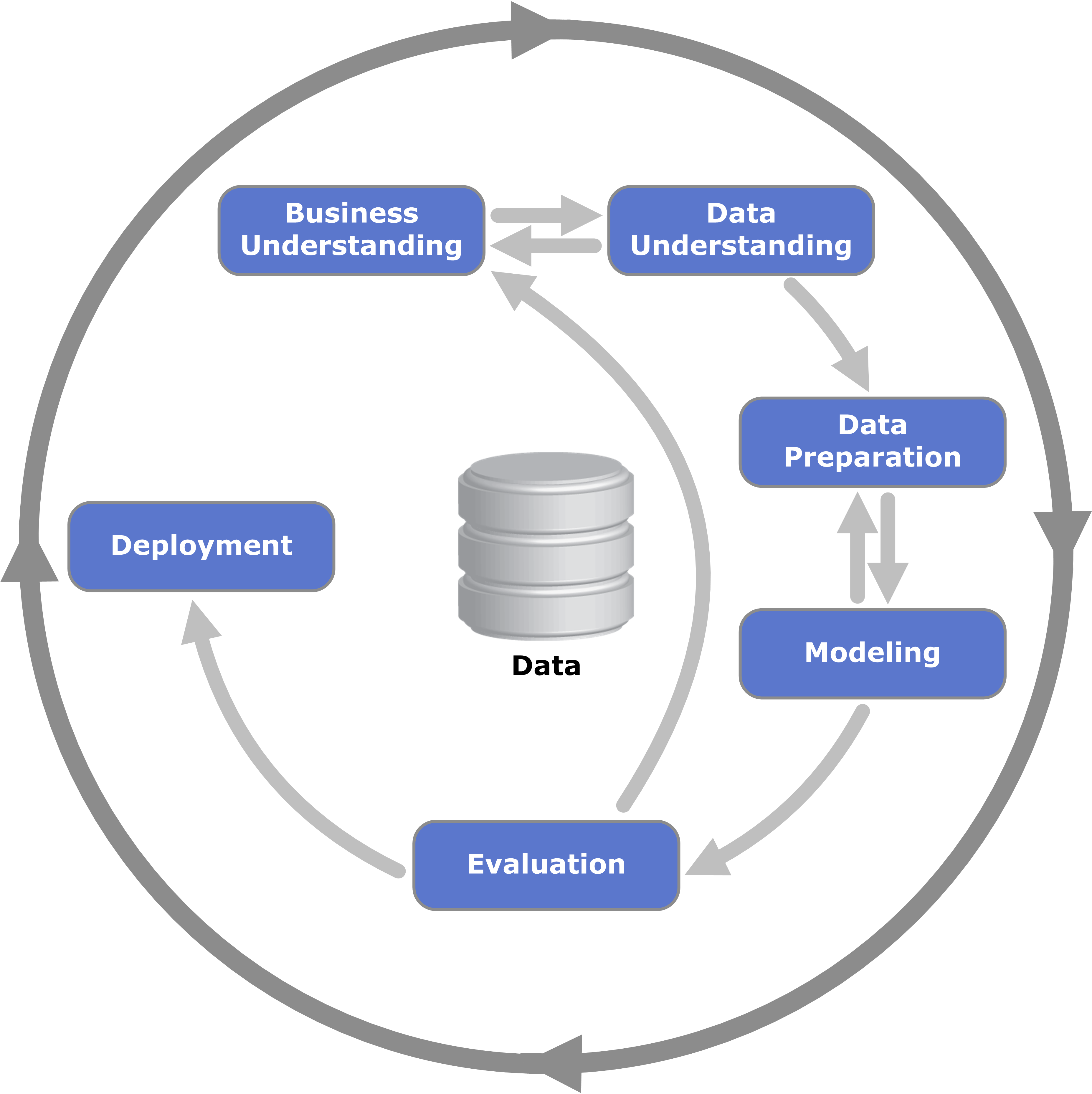
Standard data science and AI project execution lifecycle (CRISP-DM model) from business understanding through deployment
Time Estimate: 2 to 4 hours.
Instructions:
- Choose ONE of the four tracks below that best aligns with your interests or career goals.
- Complete all the deliverables listed under your chosen track.
- Document your process, including all prompts used and your iterative steps.
- Prepare your final deliverables and a short presentation according to the submission guidelines.
The Tracks
Track A: Content Creator & Marketer
Scenario: You are launching a fictional organic, eco-friendly lifestyle brand. You need to create a comprehensive digital content package to announce the launch.
Detailed Deliverables:
- Brand Identity Document:
- Use AI to brainstorm 5 potential brand names, and select the best one.
- Generate a mission statement, a vision statement, and a core values list.
- Define the brand’s tone of voice (e.g., playful, serious, inspiring) with examples.
- Logo and Visual Assets:
- Use an image generation tool (Midjourney, DALL-E 3) to create a logo.
- Generate 2 supplementary visual assets (e.g., a website banner or a product mockup).
- Social Media Campaign:
- Create a 1-week social media calendar (3 posts).
- Write the copy for each post, tailored for Instagram and LinkedIn.
- Generate accompanying images for each post.
- Promotional Video Script & Audio:
- Write a 30-second to 1-minute script for a promotional video. Include visual cues and voiceover text.
- (Optional) Use AI audio tools (like Suno or ElevenLabs) to generate background music or a voiceover.
- Blog Post:
- Write a 500-word SEO-optimized blog post introducing the brand to the world.
Step-by-Step Guide:
- Start with a broad prompt for the brand identity, giving the AI the role of a “Senior Brand Strategist”.
- Refine the outputs until you have a solid foundation. Use this foundation as context for all subsequent prompts to maintain consistency.
- When generating images, carefully construct your prompts to ensure a consistent visual style (e.g., specifying colors, art style, and lighting).
Track B: Data Analyst & Strategist
Scenario: You are a data analyst for an e-commerce company. You have been provided with a raw, messy dataset of customer feedback and sales data (you can use AI to generate a synthetic dataset or use a public one like Kaggle).
Detailed Deliverables:
- Synthetic Dataset Generation (if applicable):
- Use AI to generate a CSV file containing at least 100 rows of synthetic e-commerce data (columns: CustomerID, Age, PurchaseAmount, ProductCategory, ReviewScore, FeedbackText).
- Data Cleaning & Preparation:
- Use an AI tool (like ChatGPT Advanced Data Analysis) to identify missing values, outliers, and inconsistencies in the data.
- Document the steps taken to clean the data.
- Exploratory Data Analysis (EDA) & Visualizations:
- Generate at least 5 clear, insightful charts or graphs (e.g., sales by category, age distribution, sentiment analysis of reviews).
- Provide a brief interpretation of each chart.
- Executive Summary Report:
- Write a 2-page report summarizing the key findings, trends, and actionable recommendations for the marketing and product teams.
- Custom GPT / Automated Prompt Template:
- Design a comprehensive system prompt (or build a Custom GPT) that is specifically instructed to analyze future datasets of this format automatically.
Step-by-Step Guide:
- If generating the dataset, use few-shot prompting to ensure the AI formats the CSV correctly.
- Upload the dataset to an AI tool capable of running code (like ChatGPT with Python). Ask it to perform specific cleaning tasks.
- Instead of just asking for “charts,” ask specific analytical questions (e.g., “Is there a correlation between Age and PurchaseAmount?”).
Track C: Developer & Technologist
Scenario: You are tasked with building a functional prototype of a mini-application that utilizes AI to solve a specific problem for users.
Detailed Deliverables:
- Application Architecture & Logic:
- Define the purpose of your app (e.g., an AI-powered travel planner, a study assistant).
- Use AI to generate the core logic or code structure (e.g., Python script, simple web app using Streamlit or Flask).
- API Integration:
- Integrate at least one external API (it could be the OpenAI API, a weather API, or a news API). Use AI to write the integration code.
- RAG Implementation (Bonus/Optional):
- Implement a basic Retrieval-Augmented Generation system where the app reads a provided document (like a PDF menu or policy document) and answers questions based only on that document.
- Technical Documentation:
- Generate a comprehensive
README.mdfile using AI, including setup instructions, usage examples, and a description of the architecture. - Unit Tests & Debugging:
- Write at least 3 unit tests for your core functions using AI. Document any bugs encountered and how you used AI to debug them.

RAG system architecture and data pipeline coupling document retrieval with augmented LLM generation
Step-by-Step Guide:
- Break down the application into small, manageable components. Do not ask the AI to “build an entire app” in one prompt.
- Prompt the AI for the basic setup, then iteratively add features.
- If you encounter errors, paste the exact error message and the relevant code snippet back into the AI for debugging.
Track D: Educator & Researcher
Scenario: You are an educator designing a modern, interactive learning module on a complex topic of your choice (e.g., Quantum Computing, History of Rome, Introduction to Machine Learning).
Detailed Deliverables:
- Research & Literature Review:
- Select a topic and use AI to summarize 5 key concepts, academic papers, or historical events related to it.
- Comprehensive Study Guide:
- Create a structured study guide with learning objectives, detailed explanations of core concepts, and a glossary of terms.
- Interactive Learning Materials:
- Generate a set of 20 flashcards (Question/Answer pairs).
- Create a 10-question multiple-choice quiz with answer keys and explanations for why the correct answer is right.
- Visual Aids & Explanatory Diagrams:
- Use AI image generation to create 3 visual aids or diagrams that explain complex parts of your topic. (Alternatively, ask the AI to generate Mermaid.js code for diagrams).
- Audio/Video Lesson Script:
- Write a script for a 5-minute video or podcast lesson, tailored to a specific audience (e.g., “Explain it like I’m 15”).
Step-by-Step Guide:
- Use role-playing prompts (e.g., “Act as an expert university professor…”) to ensure high-quality, authoritative content.
- Cross-reference the AI’s factual claims to avoid hallucinations.
- For the quiz, use few-shot prompting to show the AI exactly how you want the questions and answers formatted.
Submission Guidelines
To successfully complete this capstone, you must submit a comprehensive package that details both your outputs and your process.
What to Submit:
A zipped folder or a link to a GitHub repository/Google Drive folder containing:
- The Deliverables: All the files required for your chosen track (documents, images, code, etc.).
- The Prompt Log (
prompts.txtorprompts.md): A document listing every major prompt you used, the tool you used it in, and a brief note on why you used it or how you tweaked it. - Self-Reflection (1 page): A brief essay answering:
- What worked well?
- What challenges did you face with the AI, and how did you overcome them?
- How did your prompts evolve from your first attempt to your final result?
Presentation Format:
Prepare a 5-7 minute presentation (e.g., 5-10 slides) showcasing your final outputs. You should spend 2 minutes on the final product and 3-5 minutes on the process of how you got there, highlighting your prompt engineering strategies.
Grading Rubric
Your project will be evaluated based on the following comprehensive rubric:
| Criteria | Weight | Excellent (90-100%) | Satisfactory (70-89%) | Needs Improvement (<70%) |
|---|---|---|---|---|
| Prompt Quality & Technique | 25% | Utilizes advanced techniques (few-shot, persona, chain-of-thought) masterfully. Prompts are highly specific, providing deep context and constraints. Iterative refinement is evident. | Uses basic prompting effectively. Provides some context but relies occasionally on overly broad prompts. Some evidence of iteration. | Relies solely on zero-shot, simple prompts. Lacks context, resulting in generic outputs. Little to no iteration shown. |
| Tool Selection & Utilization | 20% | Chooses the absolute best tool for each specific task. Combines multiple tools seamlessly (e.g., using text AI to generate prompts for image AI). | Selects appropriate tools for most tasks. Competent usage, but may not utilize advanced features. | Uses tools inappropriately (e.g., asking a text model to render complex graphics) or relies entirely on one tool for disparate tasks. |
| Output Quality & Creativity | 25% | Final deliverables are highly polished, creative, professional, and directly address the chosen scenario. Barely distinguishable from high-quality human work. | Final deliverables are acceptable and complete the requirements, but may lack a final polish or exhibit minor AI “quirks”. | Deliverables are incomplete, generic, or obviously unedited AI outputs with significant flaws. |
| Documentation & Reflection | 15% | prompts.log is comprehensive. The reflection shows deep critical thinking about the AI’s capabilities, limitations, and the user’s learning process. |
prompts.log is mostly complete. Reflection is adequate but lacks deep insight into the problem-solving process. |
Documentation is missing or sparse. Reflection is superficial or just summarizes the steps without critical thought. |
| Ethical Considerations | 15% | Explicit evidence that biases, hallucinations, and safety were considered. Content is original, properly attributed (if applicable), and safe. | Generally safe and ethical, but may lack explicit acknowledgment of potential biases or minor hallucination checks. | Output contains obvious hallucinations, unaddressed biases, or inappropriate content. No evidence of fact-checking. |

AI governance and project assessment evidence chain for auditing performance, accountability, and output quality
Comprehensive Example Submission (Track A)
To give you an idea of what a stellar submission looks like, here is a condensed walkthrough of a Track A project.
1. Brand Identity
Goal: Create a brand identity for a sustainable urban gardening company.
Initial Prompt (ChatGPT-4):
“Act as a Senior Brand Strategist. I want to start a company that sells sustainable, modular urban gardening kits to millennials living in small apartments. Brainstorm 10 creative brand names, a mission statement, and define the brand’s tone of voice. The tone should be modern, encouraging, and slightly witty.”
Output Snippet:
- Name Selected: “SproutSpace”
- Mission: “To turn every concrete balcony into a thriving ecosystem, one modular planter at a time.”
- Tone: Witty, modern, approachable. Example: “Don’t have a green thumb? Don’t worry, our plants are practically indestructible. (But please, still water them).”
2. Logo Generation
Goal: Generate a logo for SproutSpace.
Iterative Prompting (Midjourney):
- Attempt 1:
/imagine a logo for an urban gardening company called SproutSpace, modern(Result was too complex and realistic). - Attempt 2 (Refined):
/imagine a minimalist flat vector logo for an urban gardening brand, a geometric leaf merging with an apartment building window, earthy green and terracotta colors, white background, simple, clean, corporate identity --no text, words, letters --v 6.0(Result was perfect).
3. Social Media Campaign
Goal: Create 3 posts.
Prompt (Claude 3):
“You are the social media manager for ‘SproutSpace’ (mission: turn balconies into ecosystems; tone: witty, approachable). Write 3 Instagram posts launching our new ‘Balcony Starter Kit’. Include a hook, main body, CTA, and 5 hashtags. Format as a table with columns: Post Number, Visual Idea, Caption.”
Output Snippet:
| Post | Visual Idea | Caption |
| :— | :— | :— |
| 1 | A sleek white SproutSpace planter on a tiny balcony overflowing with basil. | Think you don’t have room for a garden? Think again. 🌿 Meet the Balcony Starter Kit. It fits in the space of a doormat but grows enough herbs to make you the pesto king/queen of your apartment block. Ready to grow? Link in bio! 👇 #SproutSpace #UrbanGardening #BalconyGarden #PlantParent #SustainableLiving |
4. Self-Evaluation & Reflection (Snippet)
“I learned that Midjourney struggles with text, so I specifically added --no text to my prompt and decided to add the brand name later using Canva. For the social media posts, my first prompt generated very corporate-sounding text. I realized I needed to explicitly feed the AI the ‘Tone’ and ‘Mission’ we generated in step 1 to get the witty, modern voice I wanted. This showed me the importance of maintaining context across the project.”
Good luck! We look forward to seeing your innovative capstone projects.